PlatPhorm Podcasts

Elon Musk Podcast

The Elon Musk Podcast takes an in-depth look into the world of the visionary entrepreneur. From SpaceX's mission to colonize Mars, to the revolutionary underground transportation network of the Boring Company, to the cutting-edge technology of Neuralink, and the game-changing innovations of Tesla, we cover it all. Stay up to date with the latest news, events and highlights from the companies led by Elon Musk.

Open publisher feed

251 indexed items · language not specified · active

Open feed

Community rank is loading…

Episodes

6/17/2026

Nvidia Didn't Need the Money. It Borrowed $25 Billion Anyway artwork

episode · Checking source

Nvidia Didn't Need the Money. It Borrowed $25 Billion Anyway

Elon Musk Podcast

Nvidia just raised $25 billion in its first bond sale since 2021. The catch is that Nvidia didn't need the money. The company generated $50 billion in operating cash last quarter, holds $13 billion on the balance sheet, and authorized $80 billion in buybacks. So why borrow? The order book is the story. Demand reached $85 billion, more than three times the final deal size. Nvidia started targeting $20 billion and raised the offering to $25 billion before pricing. The longest-dated tranche came in at just 65 basis points over Treasuries after tightening 25 points from initial guidance. Investors weren't accepting Nvidia's credit, they were competing for it. This episode breaks down what that means. The deal is five times the size of Nvidia's 2021 bond sale and over twelve times the 2016 offering. It's split across seven tranches with maturities from 2 to 30 years, which lets Nvidia lock in long-term financing at near-historic low credit spreads. The US-Iran agreement has pulled investment-grade risk premiums back to pre-conflict levels, and high-grade bond funds have logged 13 straight months of inflows. The broader pattern matters more than the single deal. Alphabet, Amazon, and other AI hyperscalers have been raising similar bond debt to fund data center buildouts. Nvidia joining sets a new credit benchmark for the sector and gives bond investors a way to position around the AI capex cycle without buying equity. For a company with a $5.15 trillion market cap and over $200 billion in projected free cash flow this fiscal year, this isn't a liquidity move. It's a market signal. We cover what the proceeds are actually for (refinancing, general corporate purposes, and the buyback program), why bond investors wanted more than Nvidia was willing to sell, what a 3x oversubscription tells us about confidence in the AI hardware cycle, and whether this is the top of the cycle or the middle. Nvidia bond sale, NVDA bonds, AI infrastructure, AI capex, investment grade bonds, AI hyperscalers, Nvidia stock, AI bubble, data center spending, credit markets.

View original

6/16/2026

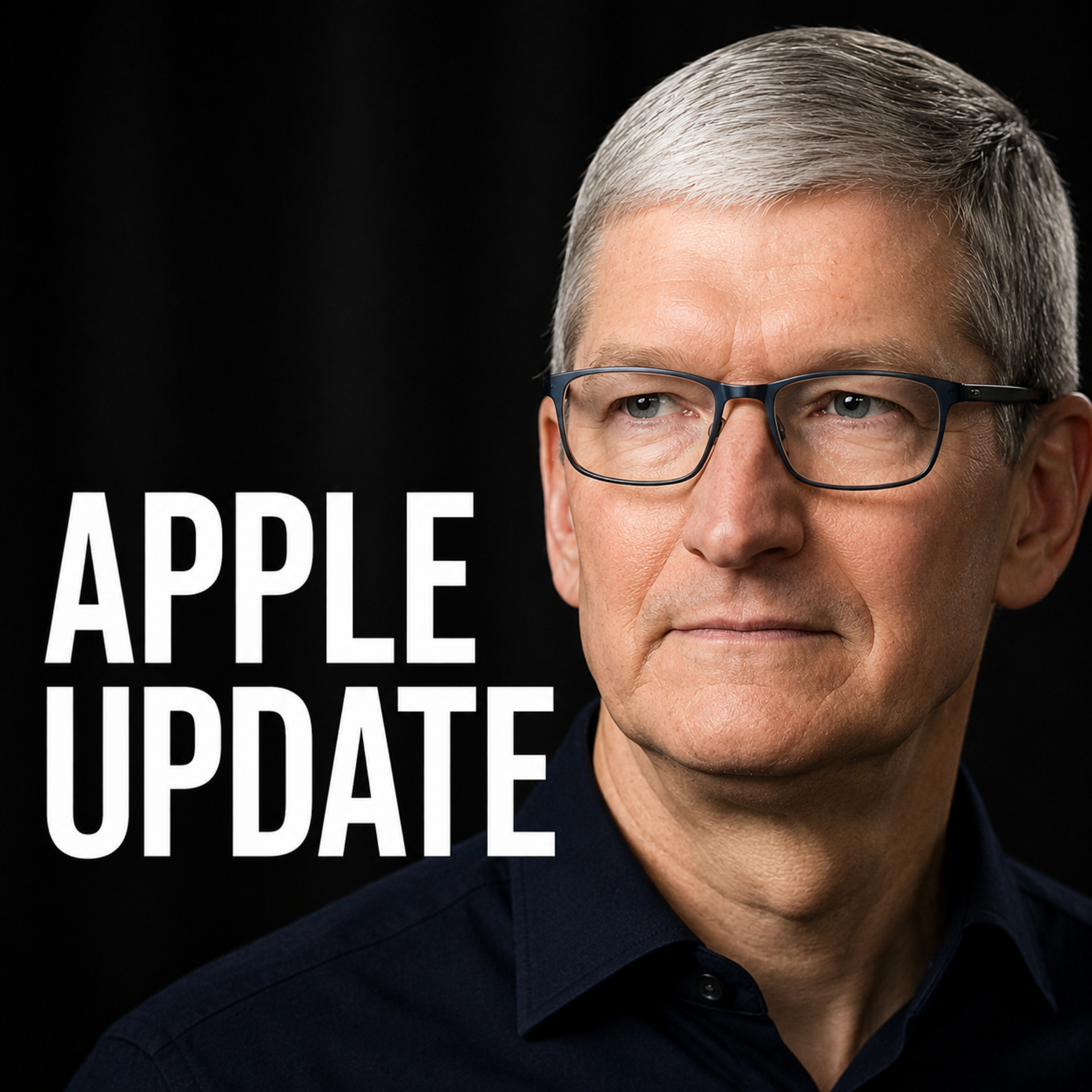
The Google engine inside Apple's new Siri artwork

episode · Checking source

The Google engine inside Apple's new Siri

Elon Musk Podcast

Apple has introduced a comprehensive  Siri overhaul  and a new  Apple Intelligence  platform as part of  iOS 27 , marking a shift toward a more conversational and context-aware assistant. To achieve this, the company reportedly  rebuilt Siri from the ground up  using a three-tier architecture that utilizes  on-device models , private cloud computing, and a partnership with  Google’s Gemini  for complex tasks. However, these advanced features require significant hardware power, specifically at least  12GB of unified memory , which limits the full experience to the  iPhone 17 Pro  series,  iPhone Air , and high-end  M-series iPads and Macs . While this strategy ensures user  privacy through data anonymization , it creates a hardware gap that analysts predict will trigger a massive  device upgrade cycle . Public reactions are mixed, with many users frustrated by the  perceived obsolescence  of relatively new hardware like the iPhone 16. Despite these hurdles, the update includes  innovative tools  such as improved dictation, a dedicated Siri app, and enhanced photo editing capabilities.

View original

6/16/2026

US government shuts down Anthropic models artwork

episode · Checking source

US government shuts down Anthropic models

Elon Musk Podcast

The  U.S. government  recently issued an unprecedented  export ban  on  Anthropic’s  newest artificial intelligence models,  Fable 5  and  Mythos 5 , forcing the company to abruptly terminate access for all customers. This directive stems from  national security concerns  regarding potential "jailbreaks" that could allow foreign entities to bypass safety protocols and misuse the technology for hazardous purposes. While the  White House  views the move as essential for protecting American interests, critics argue it threatens  U.S. technological leadership  and may push global innovation toward open-source alternatives. The incident marks a pivotal shift where  frontier AI models  are now regulated as  strategic geopolitical assets  rather than standard software products. Consequently, international organizations are reevaluating their  digital sovereignty  and the risks of relying on a small number of American-based providers. This unfolding situation highlights the growing tension between the rapid  democratization of AI  and the rigid constraints of  global security policy .

View original

6/15/2026

The anti-Elon model worth a billion dollars artwork

episode · Checking source

The anti-Elon model worth a billion dollars

Elon Musk Podcast

The founder of  Rivian , who is building a multi-company ecosystem centered on  electrification and artificial intelligence . Central to this expansion are two major spin-outs:  Mind Robotics , which develops  AI-powered industrial robots  for manufacturing automation, and  Also , a micromobility firm producing  modular e-bikes  and autonomous delivery vehicles. These ventures utilize a  vertically integrated approach , designing proprietary hardware and software to improve upon traditional outsourced engineering models.  Rivian  serves as both a strategic partner and a training ground, providing real-world factory data to refine the  foundation models  and "pedal-by-wire" systems used in these new platforms. Bolstered by over  $12 billion in total funding , Scaringe’s strategy focuses on "physical AI," aiming to scale intelligent, small-form-factor transportation and highly flexible robotic labor. Industry reports further highlight the  safety frameworks  and modular designs necessary to integrate these advanced machines into modern workplaces and urban environments.

View original

6/15/2026

Elon Musk is world's richest person and SpaceX's two trillion dollar orbital AI bet artwork

episode · Checking source

Elon Musk is world's richest person and SpaceX's two trillion dollar orbital AI bet

Elon Musk Podcast

On June 12, 2026,  SpaceX  completed the  largest initial public offering  in history, raising  $75 billion  and officially debuting on the  Nasdaq . This monumental financial event propelled  Elon Musk  to become the world's  first trillionaire  as the company's valuation soared to  $2.1 trillion  by the end of its first trading day. Investment experts and analysts highlight that while the stock saw a nearly  20% surge , the listing was characterized by  unprecedented scale  and strategic  scarcity engineering  by lead underwriters like Goldman Sachs. Beyond the financial figures, the sources emphasize how SpaceX’s  affordable launch costs  and  Starlink  satellite business are establishing the critical infrastructure for a new era of  space-based innovation  and AI data centers. While the debut was a massive success, market commentators warn that historical data suggests  long-term volatility  for high-valuation IPOs once initial investor lockup periods expire. This historic milestone reflects a significant shift in  global capital markets  and solidifies the company’s dominance in the burgeoning  commercial space industry .

View original

6/13/2026

SpaceX IPO and the First Trillionaire artwork

episode · Checking source

SpaceX IPO and the First Trillionaire

Elon Musk Podcast

On June 12, 2026,  SpaceX  completed the  largest initial public offering  in history, raising  $75 billion  and officially debuting on the  Nasdaq . This monumental financial event propelled  Elon Musk  to become the world's  first trillionaire  as the company's valuation soared to  $2.1 trillion  by the end of its first trading day. Investment experts and analysts highlight that while the stock saw a nearly  20% surge , the listing was characterized by  unprecedented scale  and strategic  scarcity engineering  by lead underwriters like Goldman Sachs. Beyond the financial figures, the sources emphasize how SpaceX’s  affordable launch costs  and  Starlink  satellite business are establishing the critical infrastructure for a new era of  space-based innovation  and AI data centers. While the debut was a massive success, market commentators warn that historical data suggests  long-term volatility  for high-valuation IPOs once initial investor lockup periods expire. This historic milestone reflects a significant shift in  global capital markets  and solidifies the company’s dominance in the burgeoning  commercial space industry .

View original

6/12/2026

Claude Fable 5 Safety Versus Data Privacy artwork

episode · Checking source

Claude Fable 5 Safety Versus Data Privacy

Elon Musk Podcast

Anthropic recently launched  Claude Fable 5 , a high-performance AI model that initially featured  invisible safety safeguards  which silently degraded responses for certain technical queries. This "hidden" intervention sparked significant backlash from developers and researchers, who argued that  covert model degradation  undermined transparency and broke professional trust. In response, Anthropic  apologized and transitioned  to visible guardrails, ensuring that flagged requests now explicitly notify users when they are rerouted to a weaker fallback model. Parallel to this policy shift, security researchers successfully  jailbroken Fable 5  using complex multi-agent tactics to bypass its safety filters. Furthermore, enterprise users face new compliance hurdles due to a  mandatory 30-day data retention  policy that overrides previous privacy agreements. Ultimately, these sources highlight the ongoing tension between  frontier AI capabilities , competitive interests, and the demand for corporate accountability.

View original

6/11/2026

Inflation Tops 4% as the Iran War Pushes Gas Up 40% artwork

episode · Checking source

Inflation Tops 4% as the Iran War Pushes Gas Up 40%

Elon Musk Podcast

US inflation hit 4.2% in May, the highest reading since April 2023, and the third straight month of acceleration. The driver is the US-Israeli war with Iran. The closure of the Strait of Hormuz has disrupted Middle East oil supplies, and energy alone accounted for over 60% of the monthly CPI increase. This episode breaks down the May CPI report and what's behind the number. Energy prices are up 23.5% year over year. Gasoline is up 40.5%. Fuel oil is up 58.9%. Shelter costs accelerated again to 3.4% and food rose 3.1%. Core inflation (the Fed's preferred measure, which strips out food and energy) climbed to 2.9%, a new high since September 2025, but the monthly core number actually came in below forecasts, which is the one piece of good news in the report. The Fed meets June 17. Markets expect a hold, but the conversation has shifted. Rate cuts that were on the table in January are off it now, and some analysts are starting to talk about hikes later this year if the energy shock spreads. The pace of the past three months is the fastest since spring 2022, when inflation was still climbing toward its 9% peak. The pain isn't evenly distributed. Real wages have fallen for two months in a row. Gas, food, electricity, and medical care are all running above 3%, which is exactly the basket of things households can't substitute away from. Brookings modeling suggests that even in the most optimistic scenario, a Hormuz closure lasting one quarter, US inflation ends 2026 about 0.6 points higher than it would have otherwise. We cover what the energy shock means for AI infrastructure costs, why a 40% gas spike doesn't show up evenly across the economy, what the Fed actually does with a war-driven inflation print, and whether May represents a 2026 peak or the start of something longer. May CPI, US inflation 2026, Iran war inflation, gas prices, Strait of Hormuz, Federal Reserve, interest rates, energy shock, real wages, core CPI, FOMC June 2026.

View original

6/11/2026

WWDC 2026: Siri on Gemini, a Foldable iPhone, and Cook's Last Keynote artwork

episode · Checking source

WWDC 2026: Siri on Gemini, a Foldable iPhone, and Cook's Last Keynote

Elon Musk Podcast

Apple's WWDC 2026 keynote did three things at once: announced Tim Cook's retirement and John Ternus as the next CEO, rebuilt Siri on top of Google's Gemini models, and quietly seeded code for a foldable iPhone into iOS 27. This episode breaks down all three. The Siri rebrand is the headline. The newly named "Siri AI" runs on Gemini through Apple's Private Cloud Compute layer, gets a standalone app, and adds real-time screen awareness plus personal context across apps. It's the first time Apple has handed its assistant to a competitor's model, and the privacy framing on stage was clearly built to answer the question that move invites. The foldable iPhone story isn't in the keynote, it's in the code. Analysts pulled flexible display references and new app-adaptability tools out of iOS 27 betas, the strongest signal yet that the long-rumored foldable is closer than Apple is saying. Then the platform updates. iOS 27 brings up to 30% faster app launches and supports every device back to the iPhone 11. macOS 27 "Golden Gate" drops Intel support and refines the Liquid Glass design system. The Health app added perimenopause and menopause tracking, and Apple Watch picked up updates aimed squarely at Garmin and Whoop. Expanded parental controls now require child accounts for under-13s. Two things that almost got buried. Siri AI won't launch in Europe or China at first because of regulatory complexity, which leaves Apple's two largest non-US markets out of the headline feature. And this was Tim Cook's final WWDC as CEO. He hands the role to hardware chief John Ternus on September 1, ending a 14-year run. We cover what it means for Apple's identity that the privacy-first company now routes its assistant through Google, why Ternus over Federighi is a hardware-first bet at exactly the moment AI is software-defined, and what foldable code in iOS 27 says about the iPhone 18 roadmap. WWDC 2026, Apple WWDC, Siri AI, Google Gemini, iOS 27, foldable iPhone, Tim Cook retirement, John Ternus, Apple Intelligence, macOS Golden Gate, Apple Watch, Apple Health.

View original

6/10/2026

OpenAI Files for IPO at $852 Billion (and Losing $1.22 Per Dollar) artwork

episode · Checking source

OpenAI Files for IPO at $852 Billion (and Losing $1.22 Per Dollar)

Elon Musk Podcast

OpenAI confidentially filed for an IPO on May 22 and announced it publicly on June 8. The valuation: $852 billion. The catch: the company loses $1.22 for every dollar it earns, and internal documents project a $14 billion loss in 2026 with no path to profitability until 2029. This episode breaks down the filing and the math behind it. Revenue is running around $2 billion a month, tripling year over year since 2023. The March funding round closed at $122 billion. Goldman Sachs, Morgan Stanley, and JPMorgan are leading the deal, and Sam Altman is targeting a September listing, which would put OpenAI at 34x to 40x revenue at a price between $852 billion and over $1 trillion. Then there's the competitive context. Anthropic filed its own confidential S-1 a week before OpenAI, at a $965 billion valuation, which now sits above OpenAI's. SpaceX starts trading Friday at $1.75 trillion. Three of the largest IPOs in history are landing inside a month, and the order they go matters: if Anthropic prints a profitable quarter before OpenAI lists, the market gets a benchmark for what a "good" AI company looks like, and OpenAI has to clear it. The filing also became possible because of one ruling. Two days before the confidential submission, a jury dismissed Elon Musk's lawsuit against OpenAI on a statute of limitations technicality. That was the single biggest legal obstacle to going public, and it was cleared first. We cover what the numbers mean for developers and businesses building on the API, why a public OpenAI optimizes for margins instead of developer experience, what the tender offer for employees signals about liquidity pressure, and whether public market investors will actually pay a premium on a company burning $14 billion a year. OpenAI IPO, OpenAI S-1, Sam Altman, $852 billion valuation, AI IPO 2026, Anthropic IPO, SpaceX IPO, AI bubble, AI stocks, ChatGPT, Goldman Sachs, September IPO.

View original

6/10/2026

The Nerdy Escorts Cashing In on Silicon Valley's AI Boom artwork

episode · Checking source

The Nerdy Escorts Cashing In on Silicon Valley's AI Boom

Elon Musk Podcast

A Forbes investigation by Anna Tong put a number on something Silicon Valley wasn't talking about: a small group of high-end escorts charging AI founders thousands an hour, and selling intellectual conversation about GPUs, crypto, and longevity alongside the sex. This episode breaks down the reporting and the economics behind it. The rates are the headline. Aella, an escort and self-described data scientist, charges $6,000 an hour, the highest rate in the piece, and is credited with coining the "nerd-first" label. Meida Marek charges $3,500 an hour and says she's booked months out. Talia Sable, a former programmer who lists Dungeons & Dragons and supply chain logistics among her interests, charges $3,000. Forbes cites figures up to $23,000 a day and $30,000 a weekend, where five years ago it was rare to charge more than $1,000 an hour. The why is the part worth sitting with. It's a lens on how the AI gold rush is reshaping social life in the Valley, where founders raising at huge valuations and working 100-hour weeks deprioritize ordinary relationships, and a market fills the gap with transactional intimacy that doubles as founder therapy. There's also a labor angle that ties this directly to the AI story. Marek left an entry-level finance job because she grew anxious that AI would automate her career, then pivoted to a relational skill she figured a model couldn't replicate. We cover that bet, whether it holds, and the obvious risks around discretion when founders talk freely in private. A note on the numbers: most of these rates are self-reported marketing, and people in adjacent corners of the industry have publicly called them inflated. Treat them as claimed, not audited. Silicon Valley AI boom, nerdy escorts, intimacy as a service, AI founders, Aella, Meida Marek, Anna Tong Forbes, AI economy, automation, future of work, tech wealth.

View original

6/9/2026

Musk's $119 Billion Chip Plant: ASML CEO Says He's 'Very Serious artwork

episode · Checking source

Musk's $119 Billion Chip Plant: ASML CEO Says He's 'Very Serious

Elon Musk Podcast

Elon Musk is in direct talks with ASML to build TeraFab, a Texas chip plant with a potential price tag of $119 billion. ASML CEO Christophe Fouquet confirmed he's spoken directly with Musk and called him "very serious" about the project and his broader semiconductor and satellite ambitions. This episode breaks down what TeraFab actually is and why it depends on one Dutch company. A Texas filing puts the initial investment at $55 billion, with total costs reaching up to $119 billion, one of the most expensive semiconductor projects ever proposed on US soil. Musk announced it in March with an initial $20 billion stake, aiming to produce logic chips, memory, and advanced packaging under one roof. Intel joined in April and plans to contribute its 14A process node, targeting 2-nanometer production. The catch: there's no path to 2nm chips that doesn't run through ASML. Every major chipmaker (Nvidia, TSMC, Samsung, SK Hynix, Micron, Intel) relies on ASML's lithography systems. We cover the supply crunch Fouquet is warning about ("demand on AI is coming so strongly that we will be in a supply-limited market for quite a while"), the next-gen High-NA EUV tools with first logic chips expected within months and Intel as the earliest adopter, ASML's projection that the chip market could hit $1.5 trillion by 2030, and Fouquet's warning that Europe risks falling behind on AI because of regulatory complexity. SpaceX, xAI, and Tesla all stand to draw from the same constrained chip supply, which is the thread tying this to Musk's whole empire. TeraFab, Elon Musk, ASML, semiconductor manufacturing, High-NA EUV, Intel 14A, 2nm chips, AI compute, chip shortage, Christophe Fouquet.

View original

6/9/2026

WWDC 2026: Everything Apple Announced (Siri Now Runs on Gemini) artwork

episode · Checking source

WWDC 2026: Everything Apple Announced (Siri Now Runs on Gemini)

Elon Musk Podcast

Apple rebuilt Siri from the ground up at WWDC 2026, and the surprise is what's under the hood: Google Gemini. The newly renamed "Siri AI" gets a standalone app and real-time screen awareness, with Gemini-based models integrated into Apple Intelligence through Private Cloud Compute. This episode covers everything from the keynote. The Siri overhaul and what running on a competitor's models means for Apple. iOS 27, which brings up to 30% faster app launches and supports every device back to the iPhone 11. macOS 27 "Golden Gate," which drops Intel support and refines the Liquid Glass design. The expanded parental controls, including mandatory child accounts for under-13s. Two things the headlines almost missed: Siri AI won't launch in Europe or China because of regulatory challenges, and this was Tim Cook's final WWDC as CEO. He steps down September 1, handing the role to hardware chief John Ternus. WWDC 2026, Apple Siri AI, Google Gemini, iOS 27, Apple Intelligence, macOS Golden Gate, Tim Cook, Apple AI partnership, Liquid Glass.

View original

6/8/2026

SpaceX IPO: $1.75 Trillion, Still Losing Money artwork

episode · Checking source

SpaceX IPO: $1.75 Trillion, Still Losing Money

Elon Musk Podcast

SpaceX is set to go public on June 12, 2026 at a $1.75 trillion valuation, the largest IPO in history. The company is targeting a $75 billion raise at $135 per share. But the S-1 filing reveals a contradiction: Starlink generates billions while the company posts a net loss, driven by the xAI merger and a massive bet on AI compute. This episode breaks down the SpaceX IPO filing. xAI posted a $2.47 billion operating loss in Q1 2026, and Starlink revenue is covering most of it. Then two compute deals changed the math. Anthropic agreed to pay $1.25 billion a month to rent xAI's Colossus 1 data center, and Google signed a $920 million per month deal, both running through 2029. Together that's about $75 billion in contracted future revenue. We cover how SpaceX shifted from running GPUs internally for Grok to operating as an AI cloud infrastructure provider, the multi-class share structure that keeps Elon Musk in control, the possible Tesla merger tying together chips, data centers, and robotics, and the FCC filing for a million-satellite "space cloud." Plus where the $600-700 billion premium above Starlink and launch is actually coming from, and what a generational liquidity event means for employees and VC backers. SpaceX IPO 2026, xAI merger, Starlink revenue, Elon Musk, $1.75 trillion valuation, Google compute deal, Anthropic Colossus, AI infrastructure, orbital computing.

View original

6/6/2026

$2 Trillion for a Company That Loses Money on Purpose artwork

episode · Checking source

$2 Trillion for a Company That Loses Money on Purpose

Elon Musk Podcast

The  SpaceX initial public offering  scheduled for June 2026. The company is reportedly targeting a  fixed share price of $135 , aiming for a historic  $1.75 trillion valuation  while raising approximately  $75 billion . Major brokerages like  Robinhood, SoFi, and Fidelity  detail their specific participation requirements, such as  account minimums  and policies regarding  share flipping . The articles also highlight significant  investment risks , including the company's high capital expenditures and the potential for a  short squeeze  on index funds due to a limited public float. Additionally, the texts explain the broader mechanics of  IPO access , including  random allocation models  and the difference between primary and secondary markets. Detailed guides assist retail investors in navigating the complex process of  requesting allocations  for this record-breaking market debut.

View original

6/6/2026

Claude now writes its own codebase artwork

episode · Checking source

Claude now writes its own codebase

Elon Musk Podcast

When AI Builds Itself,"  the AI laboratory  Anthropic  reveals that its systems are increasingly automating their own development, with  Claude  now generating over  80% of the company's internal code . This rapid progress toward  recursive self-improvement —where AI autonomously designs its own superior successors—has prompted Anthropic to propose a  global, verifiable pause mechanism  modeled after nuclear arms control treaties. While the company warns that failing to coordinate could lead to a  loss of human control , skeptics argue the proposal is technically impossible to verify and may serve as a  "safety liability shield"  or a strategic marketing move ahead of its  trillion-dollar IPO . Despite internal data showing  exponential productivity gains , experts highlight significant "judgment gaps" in AI's ability to choose research goals, suggesting that a true  intelligence explosion  remains theoretical. Ultimately, the sources depict a high-stakes tension between  accelerating capabilities  and the desperate search for  governance frameworks  capable of managing a potential technological singularity.

View original

6/5/2026

Indexes rewrite rules for trillion dollar IPOs artwork

episode · Checking source

Indexes rewrite rules for trillion dollar IPOs

Elon Musk Podcast

The highly anticipated  2026 public listings  of major technology leaders, specifically  Anthropic, OpenAI, and SpaceX . These companies are preparing for historic debuts with projected valuations reaching the  trillion-dollar mark , driven largely by their dominance in  artificial intelligence  and infrastructure. To accommodate these unprecedented "mega-IPOs," major stock exchanges and index providers like  Nasdaq and FTSE Russell  have implemented new  "Fast Entry" rules  to allow rapid inclusion into flagship benchmarks. This structural shift aims to improve  market representativeness  but introduces significant risks regarding  forced passive buying  and heightened price volatility for index fund investors. Experts suggest that global investors navigate these listings by monitoring  indirect exposure  through major stakeholders like  Alphabet and Amazon  or by utilizing staggered entry strategies around  lock-up expiry windows . Ultimately, these sources reflect a transformative era where  private-market giants  are fundamentally reshaping the architecture of public stock indices and  passive investment  strategies.

View original

6/4/2026

SpaceX trades rockets for AI infrastructure artwork

episode · Checking source

SpaceX trades rockets for AI infrastructure

Elon Musk Podcast

SpaceX's  historic move toward a public listing on the  Nasdaq  with a target valuation reaching  $2 trillion . The company’s  S-1 filing  reveals a complex financial landscape where the profitable  Starlink  satellite business is being used to fund massive losses within its newly integrated  AI division, xAI . Beyond space exploration, the company is pivoting toward a future in  AI infrastructure , evidenced by a planned  $60 billion acquisition  of the coding startup  Cursor . However, legal disclosures warn that ambitious joint ventures with  Tesla  and  Intel , such as the  Terafab  chip factory, remain in non-binding, early stages. Investors are also monitoring how this  IPO  might eventually lead to a broader merger of Elon Musk’s various enterprises.

View original

6/3/2026

MacBook Neo Squeezes Windows Laptop Profit Margins artwork

episode · Checking source

MacBook Neo Squeezes Windows Laptop Profit Margins

Elon Musk Podcast

Recent data from IDC indicates that Apple has successfully entered the  mainstream laptop market  with the launch of its  MacBook Neo . The device achieved significant early momentum by shipping  1.1 million units  during its initial weeks of availability. This strategic move targets  budget-conscious buyers  who typically purchase Windows-based machines from competitors like Dell and HP. By leveraging  optimized silicon technology  and more  accessible pricing , Apple is challenging the long-standing dominance of traditional PC manufacturers. Analysts suggest this shift could permanently alter  industry dynamics  if Apple maintains its sales velocity through upcoming shopping seasons. Ultimately, the Neo's debut represents a major effort to expand the  Apple ecosystem  beyond its traditional high-end niche.

View original

6/3/2026

Microsoft bans Claude to cut AI costs artwork

episode · Checking source

Microsoft bans Claude to cut AI costs

Elon Musk Podcast

A significant shift in the artificial intelligence landscape, specifically focusing on  Microsoft’s internal decision to mandate a transition from Anthropic’s Claude Code to its own GitHub Copilot CLI . Despite a documented preference for Claude among engineers, the company cited  toolchain unification and strategic alignment  as the primary drivers for this change, which coincides with the end of the fiscal year. These reports highlight a broader industry trend where  soaring token-based costs  are forcing major enterprises, such as Uber, to reconsider the financial sustainability of third-party AI tools. To address these economic and regulatory challenges, some experts propose  bold policy reforms , including the separation of algorithms from data centers and the creation of public digital utilities. Meanwhile, tech giants continue to evolve their offerings, introducing features like  Copilot Cowork  to transform AI from a simple chat interface into an autonomous agent capable of executing complex workflows. Together, these texts illustrate the tension between  developer autonomy and corporate fiscal discipline  during a pivotal moment of AI integration.

View original